Yoga for Beginners: The Complete Step-by-Step Guide
Starting yoga can feel intimidating. Walk into any studio and you'll see lithe practitioners folding effortlessly into postures that look, frankly, impossible. Browse Instagram and you'll be flooded with handstands on cliff edges. None of that has anything to do with what yoga actually is, or with the practice you are about to begin. This guide is for the absolute beginner — the person who has never stepped on a mat, who is unsure if their body "can do" yoga, who simply wants a calmer mind and a stronger body. By the end of these few thousand words, you will know exactly how to begin.
Why Start Yoga at All?
Before we get to the practical steps, it helps to be clear about what yoga offers. Decades of research now confirm what practitioners have known for millennia: regular yoga reduces stress and anxiety, improves flexibility and strength, lowers blood pressure, eases chronic back and neck pain, improves sleep quality and supports a healthier weight. Beyond the physical, yoga cultivates a quality of attention that bleeds into the rest of life — you become slightly less reactive, slightly more present, slightly more comfortable in your own skin. These changes are not dramatic in any single class. They compound, week after week, into a different way of being.
What You Actually Need
One of the great gifts of yoga is how little equipment it requires. To start, you need exactly two things: a sticky mat and comfortable clothing you can move and breathe in. That's it. You do not need expensive leggings, props, blocks, straps, fancy bottles or a special outfit. A basic mat costs around twenty dollars and will last for years. Wear soft cotton or athletic clothing that doesn't restrict movement at the hips or shoulders.
If you want to add a few small comforts, a yoga block (or a thick book) is endlessly useful for bringing the ground closer when your hands can't quite reach the floor. A folded blanket cushions the knees and supports the spine in seated poses. A wall is one of the best yoga props ever invented — totally free.
Where to Practice
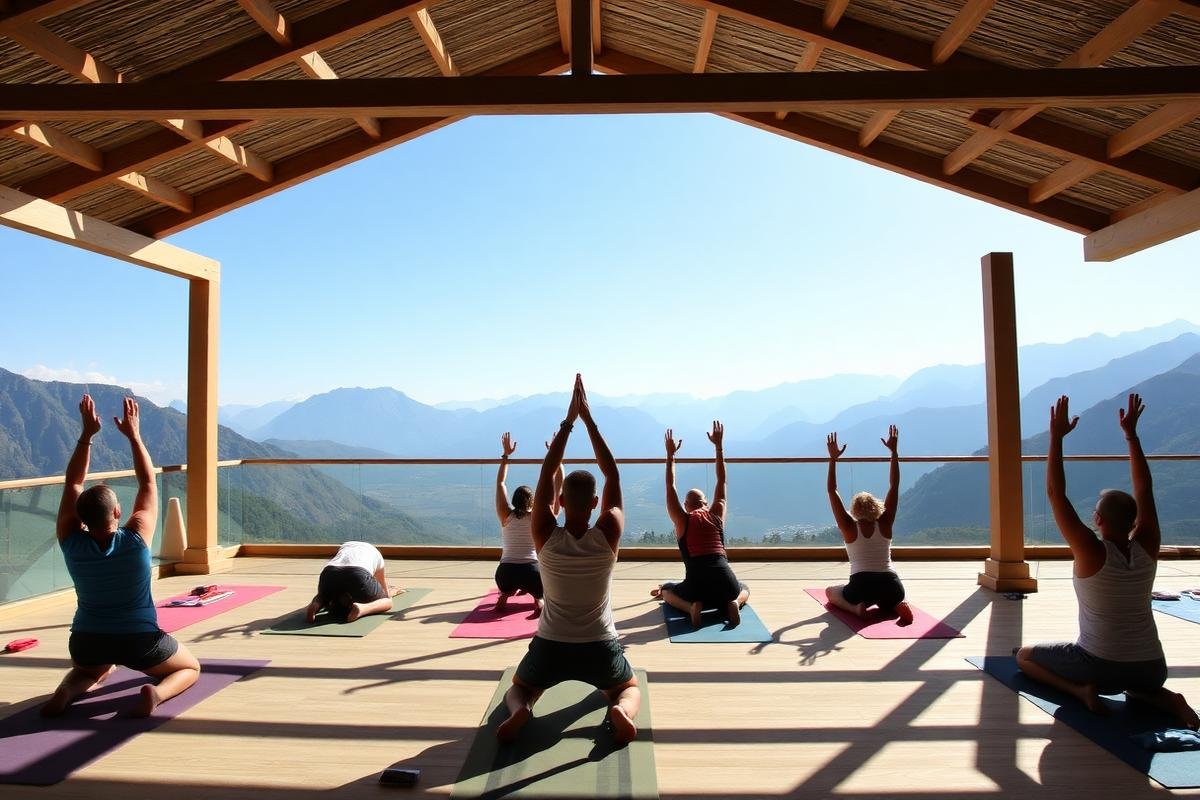
You have three options: a studio class with a teacher, an online class at home or a quiet self-led practice. For an absolute beginner, the best choice is usually a beginner-level in-person class. A good teacher will correct your alignment in real time, prevent injuries and help you understand subtle cues that videos cannot convey. Look for "beginner," "level 1" or "fundamentals" in the class name — never start with "all levels," which is studio code for "moderately advanced."
If a studio is not accessible, dozens of excellent online teachers offer free beginner courses on YouTube. Practice in a quiet room with enough space to extend your arms in every direction. Mornings are traditional but any time works — the best time to practice is the time you'll actually show up.
Your First Class: What to Expect
Arrive ten minutes early, leave your shoes at the door, find a spot near a more experienced student so you can watch their movements. The teacher will likely begin with a few minutes of seated breathing. The class will then move through a warm-up, a series of standing poses, perhaps some seated forward folds and twists, and finish with at least five minutes of Savasana — lying flat on the back in complete rest. The whole sequence usually takes 60 to 75 minutes.
You will feel awkward. Your body will not look like the teacher's body. Postures that seem easy when described will feel surprisingly difficult. All of this is normal. Smile, breathe and stay curious. Compete with no one, especially not yourself.
The First Ten Poses to Know
Almost every yoga class draws from the same small library of foundational postures. Learn these ten and you'll recognize 80% of what any teacher asks you to do: Mountain Pose, Downward-Facing Dog, Cat-Cow, Child's Pose, Cobra, Warrior I, Warrior II, Tree Pose, Seated Forward Fold and Corpse Pose. Spend your first month focused on understanding the alignment and breathing of these ten before adding anything new. Depth comes from repetition, not novelty.
The Breath Is Everything
If you remember nothing else from your first months of yoga, remember this: the breath is the practice. Anyone can twist their body into a shape. What distinguishes yoga from gymnastics is the conscious, steady breath linking each movement. Breathe in and out through the nose, slowly and evenly, with a soft sound at the back of the throat. If your breath becomes ragged, you've gone too far in the pose — back off until the breath returns. The depth of your breath is a more honest measure of your practice than the depth of your stretch.
Common Beginner Mistakes
Three mistakes derail most beginners. The first is comparing themselves to others — please, don't. Every body arrives with different proportions, histories and limitations. The second is pushing too hard, too fast. Yoga rewards consistent moderate effort over heroic occasional efforts. The third is skipping Savasana. New students often roll up their mats before final rest, treating it as optional. It is not. Savasana is when the nervous system integrates everything you just did. It is the most important pose of the class.
Building a Sustainable Practice
The single greatest predictor of long-term benefits is how often you practice, not how long each session lasts. Twenty minutes a day, four days a week, transforms more bodies than a single 90-minute class on Sundays. Place your mat somewhere visible. Schedule sessions in your calendar like any other appointment. Pair practice with an existing habit — right after waking, right before dinner. Within six weeks the habit will feel automatic.
Track progress not by flexibility or balance but by how you feel off the mat. Are you sleeping better? Less reactive in traffic? More patient with your children? These are the real metrics of a yoga practice. The poses are simply the curriculum. The transformation is the prize.
Final Words for Your Beginning
Yoga is not a destination. There is no advanced level you eventually reach where you can stop. The most senior teachers describe themselves, sincerely, as students. The practice keeps unfolding, layer after layer, for as long as you keep showing up. So begin gently. Be patient with the inevitable awkwardness. Trust that small consistent effort will, in surprisingly little time, become a foundation you'll wonder how you ever lived without. Welcome to the mat.