
You could spend a lifetime exploring yoga and still find new depth in the eight or ten most fundamental postures. Asanas are the doorway to the rest of the practice — pranayama, meditation, philosophy — and learning them well pays dividends for decades. This guide covers the foundational poses you'll encounter in nearly every class, with clear cues and honest notes on what each is teaching.
Before you begin, a gentle reminder: yoga is not gymnastics. A pose held with attention and steady breath is infinitely more valuable than one forced into a "deeper" version. Listen to your body, modify generously and never push through sharp pain.
Mountain Pose — Tadasana
The foundation of every standing pose. Stand with feet hip-width apart, weight evenly distributed across all four corners of each foot. Engage the thighs, lengthen the tailbone down, lift the crown of the head toward the ceiling. Arms rest at the sides, palms forward, shoulders relaxed. Hold for five steady breaths. Mountain teaches presence: the simple act of standing tall becomes a meditation on grounding and uprightness.
Downward-Facing Dog — Adho Mukha Svanasana
From hands and knees, tuck the toes and lift the hips up and back, forming an inverted V. Spread the fingers wide, press the index-finger knuckle firmly down. Bend the knees if your hamstrings are tight — straight legs are a goal, not a requirement. Downward Dog stretches the entire posterior chain, strengthens the arms and gently inverts the body, calming the nervous system.
Warrior II — Virabhadrasana II
Step the feet about a leg-length apart. Turn the right foot out 90 degrees and the left foot in slightly. Bend the right knee until it stacks above the ankle, keeping the torso square to the long edge of the mat. Extend the arms parallel to the floor, gaze over the front fingertips. Warrior II builds tremendous leg strength, opens the hips and cultivates the steady, focused intensity its name suggests.
Tree Pose — Vrksasana
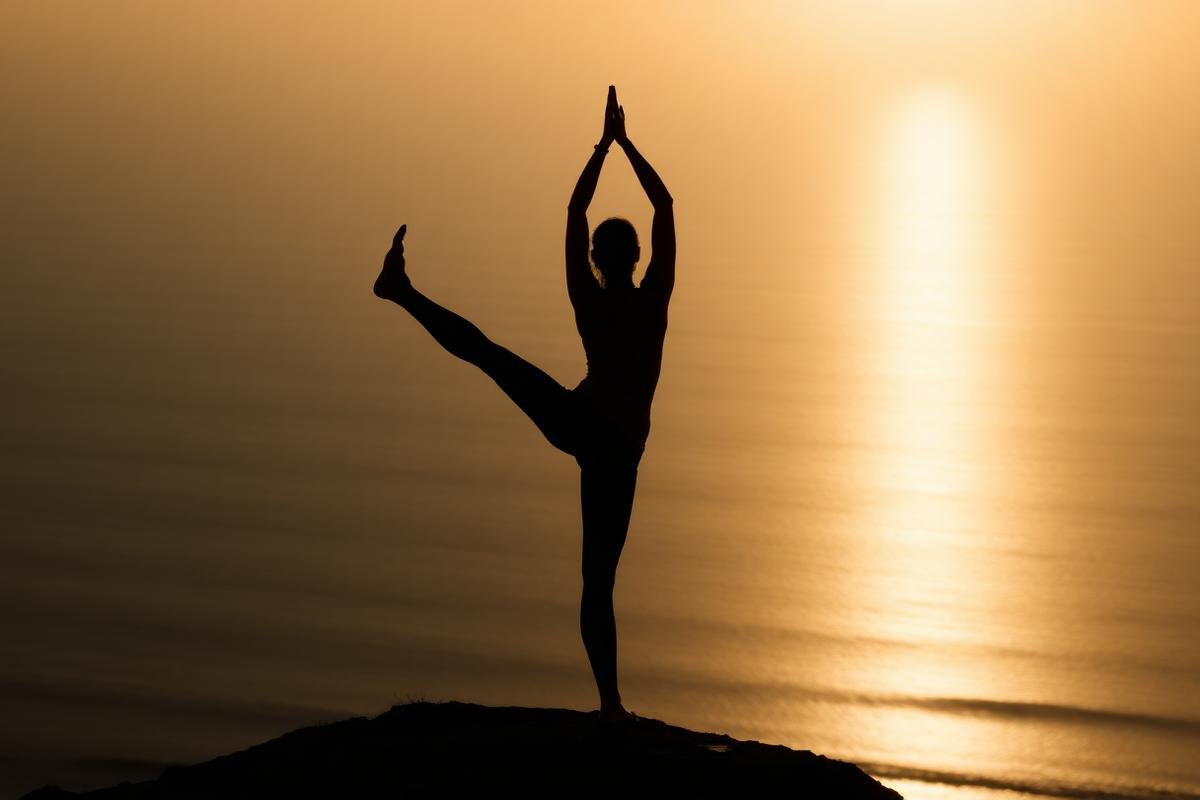
From Mountain Pose, shift weight onto the left foot. Place the sole of the right foot on the inner left calf or thigh — never directly on the knee. Press foot and leg into each other to create stability. Bring palms together at the heart or reach the arms overhead. Tree pose develops balance, ankle stability and the patience to wobble without falling out of it.
Child's Pose — Balasana
Kneel with big toes touching, knees apart. Sit back onto the heels and fold the torso forward, arms either extended in front or resting alongside the body. Forehead rests on the mat or a block. Child's pose is the universal reset: a place to return to whenever a sequence feels too intense. It gently stretches the hips, thighs and ankles while quieting the mind.
Cobra Pose — Bhujangasana
Lie face down, hands under the shoulders, elbows hugged in. Press the tops of the feet into the floor. On an inhale, lift the chest by gently straightening the arms, keeping the lower ribs on the mat. Cobra strengthens the spine, opens the chest and counteracts the rounded posture of long hours at a desk.
Bridge Pose — Setu Bandha
Lie on your back, knees bent, feet flat and hip-width apart. Press into the feet and lift the hips, rolling the shoulders under and clasping the hands beneath you. Bridge strengthens the glutes and back, stretches the chest and is one of the most accessible heart-opening poses for beginners.
Corpse Pose — Savasana
Lie flat on the back, legs slightly apart, arms a few inches from the body, palms up. Close the eyes and release every muscle. Savasana is the most important pose of any practice — the moment when the nervous system absorbs the work you just did. Stay for at least five minutes; longer is better.
Building a Home Practice
With just these eight poses, you can create a balanced 20-minute home practice. Begin with three slow rounds of Mountain Pose and standing breaths to settle in. Move into Downward Dog and hold for five breaths. Step into Warrior II on each side. Try Tree Pose to challenge balance, then move to the floor for Cobra and Bridge. End with a generous Child's Pose and at least five minutes of Savasana.
Repeat this sequence three or four times a week and within a month you'll notice remarkable changes — better posture, easier breathing, deeper sleep and a quieter mind. The poses themselves are simple. The transformation they produce, over time, is profound.