Meditation for Beginners: How to Start a Daily Practice That Sticks
If you have ever told yourself "I can't meditate because my mind is too busy," you have perfectly described the single most common misconception about meditation. The belief that meditation requires a silent mind is like believing that exercise requires already being fit. The mind wanders — that is what minds do. The practice is not to stop the wandering; the practice is to notice the wandering and gently return. Every return is a repetition that strengthens the mental muscle of attention. Over time, the gaps between thoughts grow slightly longer, the grip of habitual reactivity loosens and a quiet clarity emerges. It does not happen in a single session. It happens through hundreds of small returns, accumulated day after day. This guide will show you exactly how to begin.
What Meditation Actually Is
Meditation is not a religion, a philosophy or a mystical state. At its simplest, it is a training in attention. Just as you lift weights to build physical strength, you meditate to build the capacity to direct and sustain your attention — and to return it when it wanders. The techniques vary enormously, from focused attention on the breath to open monitoring of all experience to contemplation of specific phrases or visualizations. What unites them all is the systematic, repeated cultivation of awareness. The benefits are well-documented: reduced anxiety and depression, improved focus and memory, better emotional regulation, lower blood pressure, enhanced immune function and structural changes in brain regions associated with self-awareness and compassion.
Choosing Your First Technique
For beginners, the most accessible entry point is breath-focused meditation. It requires no belief system, no special equipment and no prior experience. You simply sit, notice the natural movement of the breath and return your attention to the breath whenever the mind wanders. Other excellent beginner techniques include body-scan meditation — systematically directing attention through each part of the body — and loving-kindness meditation — silently repeating phrases of goodwill toward yourself and others. Try each for a week and see which one you naturally return to. The best technique is the one you will actually practice.
Setting Up Your Practice Space
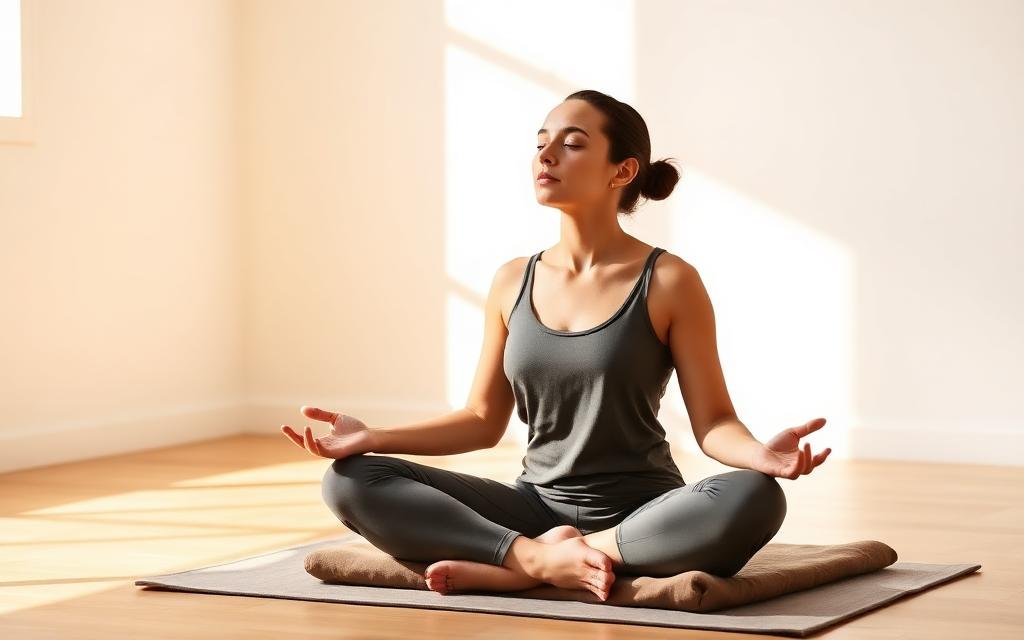
You do not need a meditation room, a Himalayan cave or an expensive cushion. You need a quiet corner, a timer and a commitment to sit. Choose a chair or a cushion on the floor. Sit with the spine upright but not rigid — imagine the crown of the head floating upward, the chin slightly tucked. The hands rest on the thighs or knees. Close the eyes or soften the gaze toward the floor. The environment should be slightly cool, since warmth induces drowsiness. Turn off notifications. Tell anyone in your household that you are unavailable for the next ten minutes. These small rituals signal to the nervous system that something important is about to happen.
The Basic Practice: Breath Awareness
Set your timer for ten minutes. Take three slow, deliberate breaths to settle. Then allow the breath to find its natural rhythm — do not control it, just observe it. Choose an anchor point: the sensation of air at the nostrils, the rise and fall of the belly or the expansion of the ribs. When you notice the mind has wandered — and it will, constantly — gently note "thinking" and return to the breath. Do not judge the wandering. Do not judge the judging. The return itself is the entire practice. You are not trying to achieve a special state. You are simply training the capacity to begin again, which is the most useful skill imaginable.
Handling Common Obstacles
Restlessness: The body feels agitated, you want to get up, you suddenly remember urgent tasks. This is normal. Restlessness is simply energy looking for a more stimulating outlet than sitting still. Acknowledge it, do not fight it and sit through it. It passes.
Sleepiness: Meditation is restful, and restful practices can trigger sleep, especially if you are chronically tired. If drowsiness is persistent, practice earlier in the day, open your eyes slightly or stand instead of sitting.
Boredom: The mind finds the breath boring because it craves novelty. Notice the craving itself. The breath is not boring — your habit of seeking constant stimulation is the obstacle.
Physical discomfort: Mild discomfort is part of the practice — learning to observe sensation without reacting. Severe pain is not — adjust your posture, use a chair or cushion and never force yourself into pain.
Building the Daily Habit
The most important factor in establishing a meditation practice is consistency, not duration. Five minutes every single day transforms more lives than an hour once a week. Start with five minutes. Set a fixed time — first thing in the morning works best for most people, before the mind becomes cluttered with the day's demands. Use habit stacking: meditate immediately after an existing habit, such as brushing your teeth or making coffee. Track your sessions in a simple notebook or app. After three weeks of daily practice, increase to ten minutes. After two months, consider fifteen or twenty. But never increase duration at the expense of consistency — a daily five-minute practice is infinitely more valuable than an occasional hour.
What to Expect in the First Month
The first week will feel awkward and possibly pointless. Your mind will wander constantly and you will wonder if you are doing it wrong. You are not. The second week, you may notice small moments of unexpected calm during the day — a slight pause before reacting, a moment of noticing your surroundings more vividly. By the third week, sitting may feel slightly less like a chore. By the fourth week, you will likely notice that you sleep slightly better, feel slightly less reactive and have slightly more space between stimulus and response. These are subtle changes, but they compound. After six months, friends may comment that you seem calmer. After a year, you may genuinely struggle to remember what it felt like to live without this practice.
Beyond the Cushion: Mindful Living
Formal sitting practice is the foundation, but the real transformation happens when mindfulness leaks into the rest of life. Eat one meal per day without distraction — no phone, no television, no reading. Walk for ten minutes paying attention to the sensations of movement rather than planning or remembering. Pause for three conscious breaths before opening your laptop, entering a meeting or responding to a difficult message. These micro-practices extend the training of meditation into the moments where it matters most. The goal is not to become a person who meditates. The goal is to become a person who is present — and that changes everything.
Closing Guidance
You do not need to travel to India, find a guru or learn Sanskrit to begin meditating. You need only ten minutes, a chair and the willingness to sit with your own mind. It will not be dramatic. It will not be easy. But it will, slowly and reliably, become one of the most important things you do for your mental health, your relationships and your capacity to meet whatever life brings with clarity and calm. Start tomorrow morning. Sit for five minutes. Breathe. Return. That is the entire practice. Everything else is just detail.