Prenatal Yoga: Safe Poses and Benefits for Every Trimester
Pregnancy is one of the most physically and emotionally demanding experiences a woman can go through. The body changes shape and weight at a remarkable pace, hormones shift dramatically, sleep becomes elusive and the nervous system is asked to prepare for something it has never done before. Prenatal yoga, practiced safely and consistently, is one of the most powerful tools available to support this journey. Multiple high-quality studies have shown that regular prenatal yoga reduces lower back pain, eases anxiety and depression, improves sleep quality, shortens labor duration and reduces the need for medical interventions during birth. This guide walks through what is safe, what to avoid and how to build a practice that grows with you through all three trimesters.
Before You Begin: The Essentials
Always consult your obstetrician or midwife before starting prenatal yoga, especially if you have any pregnancy complications, a history of miscarriage or are considered high risk. If possible, attend a class taught by a certified prenatal yoga teacher rather than a general yoga class — the modifications matter. Wear loose, breathable clothing. Stay hydrated. Practice on a non-slip mat. Above all, listen to your body more carefully than you ever have before. Pregnancy is not the time to push edges, hold poses longer or try anything new and ambitious.
First Trimester (Weeks 1–12)
The first trimester is the most delicate time. Fatigue and nausea often make a full practice impossible. Honor that — five minutes of gentle stretching and deep breathing is better than skipping the mat entirely. Most standard yoga poses are safe in the first trimester, but avoid intense abdominal work (deep twists, full boat pose, sit-ups), inversions if you are not already an experienced practitioner and any pose that requires lying flat on the belly. Hot yoga is strictly off-limits throughout pregnancy — elevated core temperature has been linked to neural tube defects in the first trimester.
Focus on: Cat-Cow, supported Child's Pose, gentle Cobra, Mountain Pose, modified Sun Salutations, simple seated forward folds with knees bent.
Second Trimester (Weeks 13–26)
Most women feel their best in the second trimester. Energy returns, nausea fades and the belly is not yet large enough to interfere with most movements. This is the ideal time to establish a consistent prenatal yoga practice. After about week 16, stop lying flat on the back for extended periods — the weight of the uterus can compress the vena cava and reduce blood flow. Prop yourself up with bolsters or pillows for any supine work. Avoid deep twists that compress the belly; opt for open twists instead, where you turn the chest away from the bent knee rather than across it.
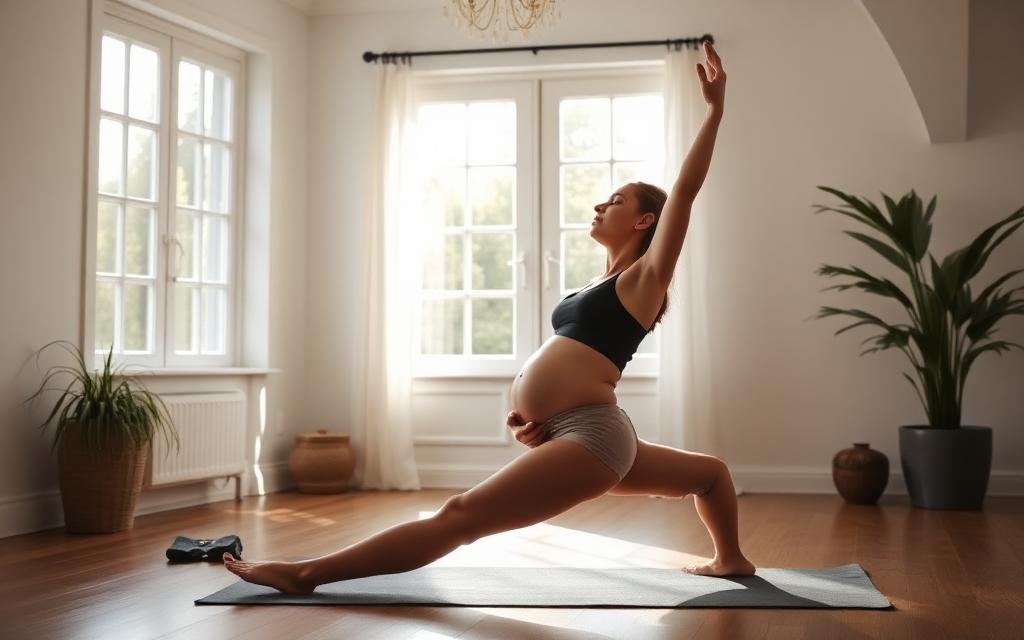
Focus on: Warrior II, Goddess Pose, modified Triangle, Cat-Cow, supported Bridge with a block, side-lying poses, gentle hip openers like supported Reclining Bound Angle.
Third Trimester (Weeks 27–40)
The third trimester is about preparation — for labor, for birth and for the marathon of early motherhood. Mobility becomes limited as the belly grows. The hormone relaxin softens ligaments throughout the body, making joints feel looser. This is a gift for childbirth but a risk for injury — do not stretch as deeply as you could pre-pregnancy, even if it feels possible. Focus on hip-opening, pelvic floor awareness and breathing practices that will serve you in labor.
Focus on: supported Squat (Malasana with a block under the hips), Cat-Cow, all-fours pelvic tilts, side-lying Savasana, supported Child's Pose with knees wide, wall-supported standing poses for balance.
Poses to Avoid Throughout Pregnancy
Some poses are simply not appropriate during pregnancy. Avoid all of these from the moment you find out you are pregnant: deep abdominal work and core crunches, full backbends like Wheel Pose, inversions like Headstand or Shoulderstand if you are not already an experienced practitioner, lying flat on the belly after the first trimester, deep closed twists, hot yoga and breath retentions like Kapalabhati or Bhastrika. When in doubt, leave it out.
Breathing for Labor
Perhaps the most valuable gift of prenatal yoga is the breathwork. Slow diaphragmatic breathing — long deep exhales — is the single most effective pain-management tool in labor. Practice it daily throughout pregnancy. Ujjayi breath (gentle ocean breath through the nose) is also wonderful preparation. The pattern is simple: inhale for four counts, exhale for six to eight counts. The longer exhale activates the parasympathetic nervous system, the same system you will need to lean on during contractions.
The Mental Benefits
Pregnancy can be a time of unexpected anxiety — about the baby's health, about labor, about the enormous life change ahead. Prenatal yoga directly addresses this. The combination of gentle movement, breathwork and mindful attention reduces anxiety symptoms more effectively than any single intervention studied. It also connects you to your changing body in a way that helps you trust it through pregnancy and into birth. That trust is one of the most important assets you can bring into the delivery room.
After Birth: Postnatal Practice
Wait at least six weeks (or longer if you had a Cesarean) before resuming a yoga practice. Your body has just done something extraordinary; it needs time to heal. When you return, start with gentle pelvic floor work, breath practice and supported restorative poses. Avoid deep abdominal work, deep twists and intense flows for several months. A skilled postnatal yoga teacher can guide you through the slow, intelligent return to practice that respects what your body has just been through.
Closing Thoughts
Prenatal yoga is not about staying fit during pregnancy. It is about meeting yourself, your body and your baby with kindness, attention and breath. It is about building the inner resources you will draw on during labor and motherhood. It is about creating a quiet space, just for you, in a season of life when everyone else's needs can feel overwhelming. Roll out your mat. Breathe. Move gently. Trust your body. You and your baby are doing something miraculous together — yoga simply helps you feel it.