Yoga for Better Sleep: A Gentle Bedtime Sequence for Deep, Restful Nights
Sleep is not a luxury — it is a biological necessity as fundamental as food and water. During sleep, the brain clears metabolic waste through the glymphatic system, consolidates memories, regulates emotions and restores virtually every tissue in the body. Chronic sleep deprivation — defined as fewer than seven hours per night on a regular basis — increases the risk of heart disease, stroke, diabetes, obesity, depression and dementia. Yet according to the Centers for Disease Control, one in three adults does not get enough sleep. Sleeping pills offer temporary chemical sedation but do not produce the restorative stages of deep and REM sleep that the body actually needs. Yoga, practiced correctly in the evening, offers a natural, side-effect-free path to the kind of sleep that genuinely restores.
How Yoga Improves Sleep
Yoga improves sleep through multiple mechanisms. The slow, deliberate movements and stretches release physical tension accumulated during the day. The coordinated breathing activates the parasympathetic nervous system, lowering heart rate and blood pressure. The mindful attention required by the practice interrupts the rumination and worry that keep so many people awake. Certain poses — particularly gentle inversions and forward folds — have direct physiological effects on the endocrine and circulatory systems that promote drowsiness. The key is practicing the right kind of yoga at the right time. Vigorous power yoga late in the evening can actually energize the body and make sleep harder. The sequence below is specifically designed to be practiced in the hour before bed.
Setting the Stage for Sleep
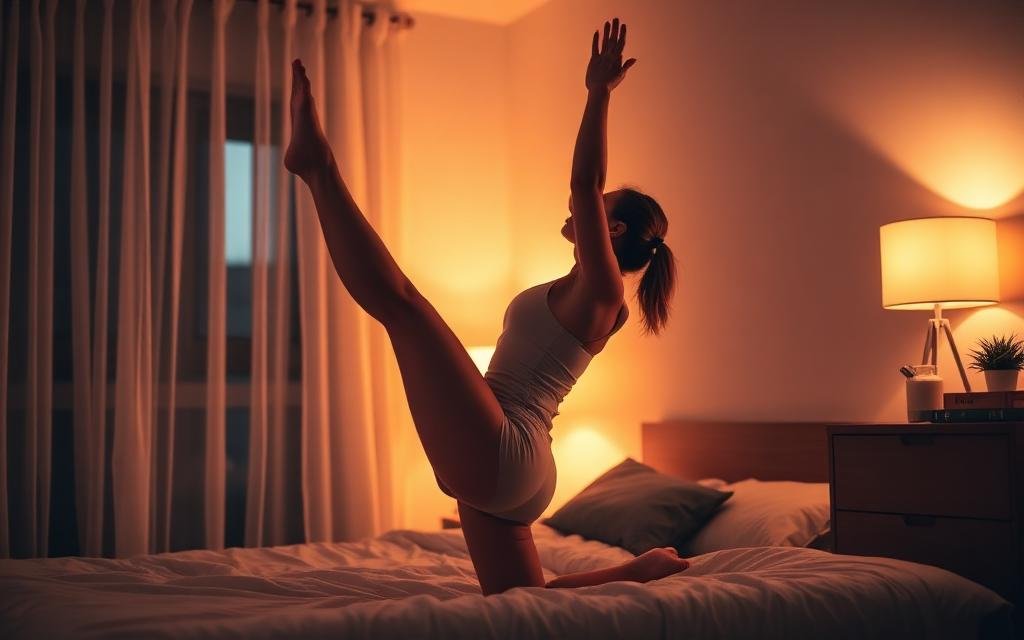
Begin by dimming the lights. Turn off all screens at least thirty minutes before you start — blue light suppresses melatonin production and is one of the most powerful disruptors of healthy sleep. If possible, practice in the bedroom itself, so the transition from mat to bed is seamless. Wear the most comfortable clothing you own. Light a single candle or use a salt lamp for gentle ambient light. The temperature should be slightly cool — the body needs to drop its core temperature by approximately one degree to initiate sleep.
Minute 0–3: Supported Child's Pose
Kneel with knees wide and big toes touching. Fold forward over a bolster or stack of pillows, turning the head to one side. Arms can wrap around the support or rest by your sides. This is the opening gesture of surrender — a signal to the nervous system that the day is ending. Breathe slowly and fully, feeling the belly press gently into the thighs with each inhale. Stay for three minutes, turning the head halfway through.
Minute 3–6: Supine Twist (Supta Matsyendrasana)
Lie on your back, knees bent and feet flat. Extend the arms out to a T shape. Drop both knees to the right side while turning the head to the left. Close the eyes. The gentle spinal twist wrings tension from the deep muscles along the spine and stimulates the vagus nerve — the primary pathway for parasympathetic activation. Stay for two to three minutes, breathing into the side ribs. Then slowly switch sides. Move mindfully — this is not exercise, it is preparation for rest.
Minute 6–10: Legs-Up-the-Wall
Position yourself so your hips rest at the base of a wall and your legs extend vertically up it. A folded blanket under the hips adds a slight inversion effect. Rest the arms by your sides, palms up. This mild inversion reverses the circulatory effects of gravity, encouraging blood and lymph to drain from the legs while calming the heart. Many practitioners find this pose so deeply relaxing that they feel drowsy within the first minute. Stay for four minutes, breathing slowly.
Minute 10–14: Reclining Butterfly
Slide away from the wall. Bring the soles of the feet together and let the knees fall open to the sides, supported by pillows or folded blankets if needed. Place one hand on the heart and one on the belly. Feel the heart beating and the belly rising and falling. This pose gently opens the hips — where emotional tension often hides — while the supine position allows total surrender. Stay for four minutes. If you feel the edges of sleep approaching, that is perfect.
Minute 14–18: Happy Baby Pose
Draw the knees toward the armpits and grasp the outsides of the feet or ankles. Let the lower back release toward the floor. Gently rock side to side, massaging the sacrum into the earth. This pose is profoundly calming for the lower back and hips after a day of sitting. It also evokes the innocent relaxation of infancy — a powerful psychological signal that it is safe to let go completely. Stay for three to four minutes, breathing naturally.
Minute 18–25: Supported Savasana
Extend the legs long and rest the arms by your sides, palms up. Place a folded blanket or small pillow under the knees to release the lower back. Cover yourself with a light blanket — the body cools as it relaxes, and warmth supports deeper rest. An eye pillow or soft cloth over the eyes blocks visual stimulation. This is your final descent into sleep. You may stay here until you drift off completely, or you may roll to your side and crawl into bed. There is no wrong way to end this practice.
Evening Pranayama for Sleep
If you are still awake after the sequence, add five minutes of Nadi Shodhana — alternate nostril breathing. This balancing breath harmonizes the nervous system and quiets mental chatter. Sit up just enough to breathe comfortably. Practice slowly, with exhales slightly longer than inhales. The extended exhale is the physiological signal that tells the body it is safe to sleep. After five minutes, lie back down. Most people find sleep follows naturally.
Building a Sleep-Conducive Lifestyle
Yoga is powerful, but it works best as part of a holistic sleep strategy. Maintain a consistent sleep and wake time, even on weekends. Avoid caffeine after 2 PM. Minimize alcohol — it may help you fall asleep but severely disrupts sleep quality. Keep the bedroom cool, dark and quiet. Reserve the bed for sleep and intimacy only — never for work or scrolling. These habits, combined with the evening yoga sequence above, create the conditions for the deep, restorative sleep that every body and mind deserves.