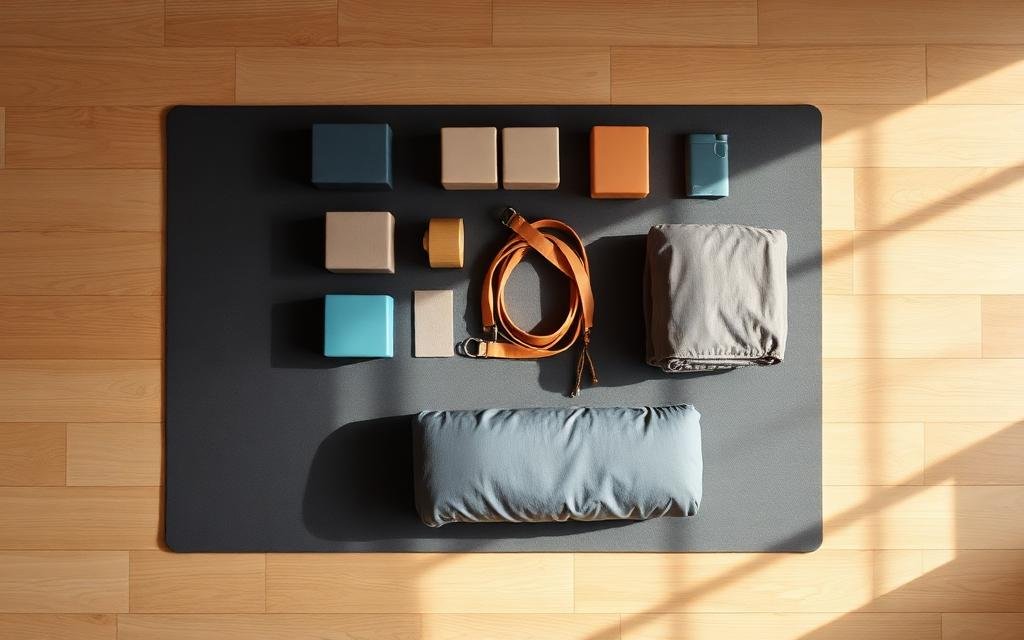
Yoga Props Explained: The Complete Beginner's Guide to Blocks, Straps and Bolsters
There is a persistent and unfortunate myth in modern yoga that props are for beginners — that as you "progress," you should need them less. The truth is exactly the opposite. The most experienced practitioners and the wisest teachers use props more, not less, because they understand what props actually do. Props are not crutches. They are tools that bring the floor closer when your body cannot reach it, that support proper alignment when muscles are still learning, that allow you to hold restorative poses for the long periods required to access their benefits and that make every yoga pose available to every body, regardless of flexibility, age or experience. This guide explains every essential prop and how to use it well.
The Mat
The yoga mat is the foundation of every practice. A good mat provides traction so your hands and feet do not slip, cushioning that protects the joints and a defined personal space that helps focus the mind. Mats range from inexpensive PVC ($20) to premium natural rubber ($80+). For beginners, a mid-range mat about 4–6mm thick offers the best balance of cushioning and stability. Thicker mats (8mm+) are kinder to sensitive knees but make balance poses harder. Thinner mats (2–3mm) are excellent for travel but unforgiving on hard floors. Replace your mat when it loses grip or shows visible wear.
Yoga Blocks
Yoga blocks are the single most useful prop ever invented. They bring the floor closer when your hands cannot reach it, support the hips and pelvis in seated poses, provide a stable platform in standing poses and add intensity to certain strength poses when used differently. Blocks come in three materials: foam (soft, light, inexpensive), cork (firm, sustainable, mid-priced) and wood (very firm, heaviest, most durable). Foam blocks are best for restorative work. Cork or wood blocks are best for standing poses requiring stability.
Common uses: Place a block under the lower hand in Triangle Pose to maintain alignment. Sit on a block in seated forward folds to tilt the pelvis forward. Squeeze a block between the thighs in Bridge Pose to engage the inner thighs. Place blocks under the hips in supported Bridge for restorative rest.
Yoga Straps
Straps extend your reach. They allow you to access the benefits of poses your current flexibility cannot quite reach unaided. They are essential for shoulder-opening work, for binding poses where you cannot quite clasp your hands and for hamstring and hip work. A basic six-foot strap with a metal D-ring buckle costs about $10 and lasts forever.
Common uses: Loop the strap around the foot in seated forward folds to maintain a tall spine while still stretching the hamstrings. Hold the strap between the hands behind the back to open tight shoulders. Use the strap in Cow Face Pose when the hands do not yet meet behind the back.
Bolsters
A bolster is a long, firm cushion that transforms restorative yoga. It provides the deep support required for poses held for five to twenty minutes, allowing the nervous system to truly release. Bolsters come in rectangular and round shapes; rectangular bolsters are more versatile. They are not cheap — quality bolsters range from $50–100 — but for anyone serious about restorative practice, a bolster is the single best investment after the mat itself.
Common uses: Place lengthwise under the spine for supported Reclining Bound Angle. Place under the knees in Savasana for low-back relief. Drape the torso over a bolster in Child's Pose for deep restoration.
Blankets
Folded yoga blankets are remarkably versatile. They cushion the knees in low lunges, lift the hips in seated meditation, support the head in twists, warm the body during Savasana and substitute for blocks in many poses. Traditional Mexican-style yoga blankets are firm enough to fold into supportive shapes — softer fleece blankets are not as useful for prop work but excellent for warmth in restorative practice. Two blankets per practitioner is ideal.
The Wall
The wall is the most underrated yoga prop, and it is completely free. The wall provides support for standing balance poses, allows safe practice of inversions like Legs-Up-the-Wall and Wall-Supported Headstand, gives proprioceptive feedback for alignment in poses like Mountain and Warrior III and creates a stable structure for restorative practice. Every home yoga space should be set up near a clear wall.
Eye Pillows
A small weighted eye pillow filled with flax seeds and lavender transforms Savasana. The gentle weight encourages the eyes to soften completely, blocks visual stimulation and signals the nervous system to release. Many practitioners report falling into a state of deep restoration within minutes of placing an eye pillow during final rest. They cost about $15 and last for years.
Meditation Cushions
If you meditate seated, a proper meditation cushion makes a remarkable difference. A traditional zafu (round buckwheat-filled cushion) or a meditation bench keeps the spine tall, the hips above the knees and the legs from falling asleep during longer sittings. Trying to meditate on a hard floor without a cushion is a recipe for back pain and short, unfocused sessions.
Building Your Prop Kit Gradually
You do not need every prop at once. Most beginners can start with a mat alone. After a few weeks, add two blocks and a strap — together costing less than $30 and dramatically expanding what your practice can do. A few months later, add two blankets. After six months or so, if you have developed an interest in restorative practice, add a bolster and eye pillow. This gradual approach lets you discover which props you genuinely use rather than accumulating a closet full of unused equipment.
Using Props Wisely
The point of every prop is to make a pose more accessible, safer or deeper. The point is never to look impressive without one. A teacher who uses no props is not more skilled; a student who uses many props is not less advanced. The intelligent use of props is itself a yoga practice — an exercise in honest self-assessment, in releasing ego, in valuing what works over what looks good. The most accomplished yogis in the world keep blocks, straps and bolsters within arm's reach. Now you know why. Set up your prop kit, learn to love each tool and watch your practice deepen in ways your unsupported body could never reach.